 Cookies
Wir benötigen Ihre Einwilligung zur Verwendung der einzelnen Daten, damit Sie unter anderem Informationen zu Ihren Interessen einsehen können. Klicken Sie auf "OK", um Ihre Zustimmung zu erteilen.
ASTM E1838-02
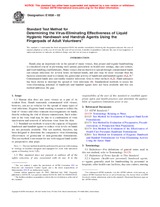
Standard Test Method for Determining the Virus-Eliminating Effectiveness of Liquid Hygienic Handwash and Handrub Agents Using the Fingerpads of Adult Volunteers
Automatische name übersetzung:
Standard Test Methode zur Bestimmung der Virus - Eliminierung Wirksamkeit der Flüssigkeit Hygienische Händewaschung und Händedesinfektion von Agents mit der Fingerbeeren des erwachsenen Probanden
NORM herausgegeben am 10.4.2002
Informationen über die Norm:
Bezeichnung normen: ASTM E1838-02
Anmerkung: UNGÜLTIG
Ausgabedatum normen: 10.4.2002
SKU: NS-43263
Zahl der Seiten: 6
Gewicht ca.: 18 g (0.04 Pfund)
Land: Amerikanische technische Norm
Kategorie: Technische Normen ASTM
Die Annotation des Normtextes ASTM E1838-02 :
Keywords:
cell culture, cytotoxicity, eluent, fingerpads, germicidal soap, hygienic handwashing, infection control, influenzavirus, in vivo testing, organic load, poliovirus, rhinovirus, rotavirus, skin flora, standard hard water, virus, virus elution, ICS Number Code 71.100.70 (Cosmetics. Toiletries)
Ergänzende Informationen
| Significance and Use | ||||||
|
This in vivo procedure is designed to test the ability of hygienic handwash agents to reduce levels of selected infectious viruses from experimentally contaminated fingerpads of adult volunteers. Since the two thumbpads and all eight fingerpads can be used in any given test, it allows for the incorporation of input virus control (two), amount of virus remaining after the inoculum has been allowed to dry (two), virus eliminated after treatment with a control or reference solution (two), and up to four replicates to assess the virus-eliminating efficiency of the product under test. No more than 100 μL of the virus suspension are required to complete one test. The results of testing with this test method may form the basis for confirmatory tests using a suitable whole-hand test protocol. This test method is designed to be performed by a trained individual, who is responsible for choosing the appropriate host system for the test virus and applying the techniques necessary for propagation and maintenance of host and test virus. For a reference text, refer to Schmidt and Emmons (7). Whereas, this test method relates to testing with viruses of human origin, it can be readily adapted to work with bacteria, fungi, protozoa and bacteriophages. Infectious microorganisms left on hands after washing can be reduced further by drying the washed hands with paper, cloth, or warm air (8). A step for the drying of fingerpads after exposure to the control or test solution, therefore, has not been included to avoid virus removal by the drying process itself. This test method is not meant for use with surgical hand scrubs or preoperative skin preps. The amount of virus on each fingerpad after the drying of the inoculum should not be less than 104 infectious units that would permit the detection of up to a 4 log10 reduction in the infectivity titer of the virus by a given product under the conditions of this test method. |
||||||
| 1. Scope | ||||||
|
1.1 Human skin does not carry viruses as a part of its resident flora. Hands transiently contaminated with viruses, however, can act as vehicles for the spread of many types of viral infections. Hygienic hand washing is meant to reduce the load of viruses and other transient microorganisms on hands, thereby reducing the risk of disease transmission. Such reduction in the virus load may be due to a combination of virus inactivation and removal of infectious virus from the skin. 1.2 Standard test methods to assess the capacity of hygienic handwash and handrub agents to reduce virus levels on hands are not presently available. This test method, therefore, has been designed to determine the comparative virus-eliminating effectiveness of germicidal or non-germicidal formulations. This test method is not meant for use with surgical hand scrubs or preoperative skin preps. Note 1—The test method should be performed by persons with training in virology in facilities designed and equipped for work with infectious agents at biosafety level 2 (5). 1.3 This standard does not purport to address all of the safety concerns, if any, associated with its use. It is the responsibility of the user of this standard to establish appropriate safety and health practices and determine the applicability of regulatory limitations prior to use. |
||||||
| 2. Referenced Documents | ||||||
|
Empfehlungen:

Aktualisierung der technischen Normen
Wollen Sie sich sicher sein, dass Sie nur die gültigen technischen Normen verwenden?
Wir bieten Ihnen eine Lösung, die Ihnen eine Monatsübersicht über die Aktualität der von Ihnen angewandten Normen sicher stellt.
Brauchen Sie mehr Informationen? Sehen Sie sich diese Seite an.