 Cookies
Wir benötigen Ihre Einwilligung zur Verwendung der einzelnen Daten, damit Sie unter anderem Informationen zu Ihren Interessen einsehen können. Klicken Sie auf "OK", um Ihre Zustimmung zu erteilen.
ASTM E1873-97
Standard Guide for Detection of Nucleic Acid Sequences by the Polymerase Chain Reaction Technique
Automatische name übersetzung:
Standard-Leitfaden zum Nachweis von Nukleinsäuresequenzen durch die Polymerase-Kettenreaktion -Technik
NORM herausgegeben am 1.1.1997
Informationen über die Norm:
Bezeichnung normen: ASTM E1873-97
Anmerkung: UNGÜLTIG
Ausgabedatum normen: 1.1.1997
SKU: NS-43401
Zahl der Seiten: 8
Gewicht ca.: 24 g (0.05 Pfund)
Land: Amerikanische technische Norm
Kategorie: Technische Normen ASTM
Die Annotation des Normtextes ASTM E1873-97 :
Keywords:
amplification, diagnosis, DNA probe, hybridization, PCR, polymerase chain reaction, primer
Ergänzende Informationen
| 1. Scope | ||
|
1.1 This guide covers guidelines, recommendations, basic considerations, criteria, and principles to be employed when developing, utilizing, or assessing PCR procedures and specific protocols for the amplification and detection of nucleic acid sequences. This guide is not intended to be a standard procedure with a list of requirements for PCR detection of nucleic acids. This guide is intended to provide information that will assist the user in obtaining quality and reliable data. 1.2 Nucleic acid sequences that can be amplified by PCR include RNA, as well as DNA sequences; RNA sequences are suitable targets for PCR following reverse transcription of the RNA to complementary DNA (cDNA). This type of amplification technique is often called reverse transcription-PCR (RT-PCR). 1.3 This guide has been developed for use in any molecular biology/biotechnology laboratory. This includes, but is not limited to, laboratories that specializein the diagnosis of human, animal, plant, or bacterial diseases. 1.5 This guide is a general one; it does not cover the additional guidance that would be needed for specific applications, for example, for the PCR detection of nucleic acid sequences of specific microorganisms. 1.6 This guide does not cover details of the various methods that can be utilized to identify PCR-amplified DNA sequences. 1.7 This guide does not cover specific variations of the basic PCR or RT-PCR technology (for example, quantitative PCR, multiplex PCR, and in-situ PCR), and it does not cover details of instrument calibration. 1.8 Warning--Laboratory work involving certain clinical specimens and microorganisms can be hazardous to personnel. Precaution-- Biosafety level 2 facilities are recommended for potentially hazardous work. Safety guidelines should be adhered to in accordance with NCCLS M29-T2, I17-P, and other recommendations. |
||
| 2. Referenced Documents | ||
|
Empfehlungen:
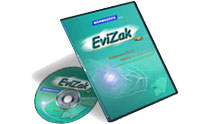
EEviZak – alle Gesetze einschließlich ihrer Evidenz in einer Stelle
Bereitstellung von aktuellen Informationen über legislative Vorschriften in der Sammlung der Gesetze bis zum Jahr 1945.
Aktualisierung 2x pro Monat!
Brauchen Sie mehr Informationen? Sehen Sie sich diese Seite an.